

What is PPC? PPC stands for pay-per-click advertising — a form of online advertising where you only pay when someone clicks your ad, not just for it being shown. It’s one of the fastest ways for a Malaysian business — whether you’re in Kota Kinabalu, Kuala Lumpur, or Johor Bahru — to appear right at the top of Google when a customer searches for what you sell.
This guide breaks down what PPC means, how PPC advertising works, what PPC marketing costs in Malaysia, and how it compares to other digital marketing options — without the jargon.
What Does PPC Mean?
PPC stands for pay-per-click advertising. It’s a form of online advertising where you only pay when someone actually clicks on your ad — not just for it being shown.
Instead of waiting months for your website to rank naturally on Google (through SEO), PPC lets you “buy” a spot at the top of the search results almost immediately. You bid on keywords relevant to your business — for example, a Kota Kinabalu hotel might bid on “hotels near Tanjung Aru” — and when someone searches that term, your ad has a chance to appear above the organic listings.
How Does PPC Work?
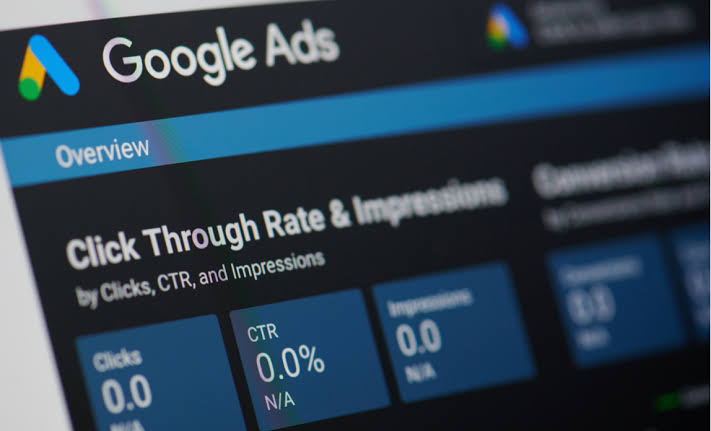
At a basic level, PPC (pay-per-click) advertising runs on an auction system:
- You choose keywords relevant to your business (e.g. “condo for sale Kota Kinabalu”)
- You set a bid — the maximum you’re willing to pay per click
- You write an ad with a headline, description, and link to your website or landing page
- The platform runs an auction every time someone searches that keyword, factoring in your bid and your ad’s relevance/quality
- You pay only when someone clicks — not for the impression itself
The platform (usually Google or Meta) doesn’t just give the top spot to the highest bidder. A well-written, relevant ad with a good landing page can outrank a competitor who bids more but has a lower-quality ad — which is why good PPC management matters more than budget alone.
Understanding the PPC Auction and Quality Score
Many business owners assume PPC is simply “whoever pays the most wins.” That’s not how it works — and understanding this is the difference between wasting money and running a profitable campaign.
Google Ads calculates something called Ad Rank for every auction, using this rough formula:
Ad Rank = Your Bid × Quality Score
Quality Score is a rating from 1-10 that Google assigns based on three main factors:
- Expected click-through rate — how likely people are to click your ad based on past performance
- Ad relevance — how closely your ad copy matches the searcher’s keyword
- Landing page experience — whether the page you send people to is fast, relevant, and easy to use
Here’s why this matters practically: a business with a RM 2.00 bid and a Quality Score of 8 can outrank a competitor bidding RM 3.50 with a Quality Score of 4. A higher Quality Score also directly lowers what you actually pay per click — Google effectively rewards advertisers who create relevant, useful ads with cheaper clicks.
This is why so many Malaysian businesses who “tried Google Ads and it didn’t work” often had a Quality Score problem, not a budget problem — usually caused by sending ad clicks to a generic homepage instead of a dedicated, relevant landing page.
Types of PPC Campaigns
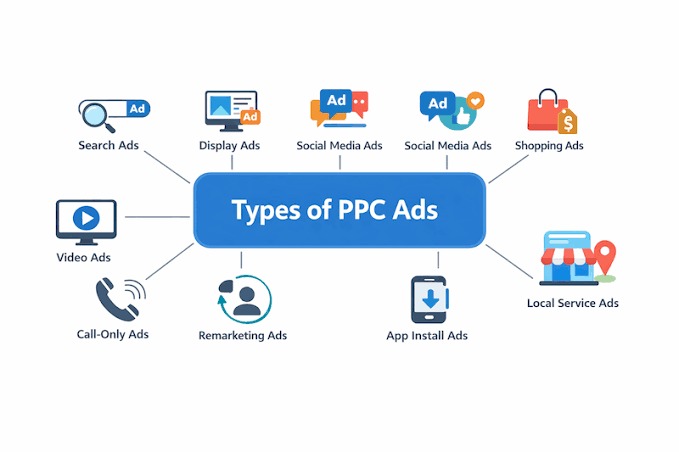
“PPC” is often used as shorthand for search ads, but it actually covers several different campaign formats, each suited to a different goal:
- Search Ads — text ads that appear on the Google search results page when someone types a relevant query. Best for capturing people with clear buying intent.
- Display Ads — banner-style image ads that appear across millions of partner websites and apps in the Google Display Network. Best for brand awareness rather than immediate conversions.
- Shopping Ads — product listings (with image, price, and store name) that appear at the top of Google Search for product-related queries. Essential for e-commerce businesses.
- Video Ads — ads that run before, during, or alongside YouTube videos. Good for storytelling and brand-building.
- Remarketing/Retargeting Ads — ads shown specifically to people who already visited your website but didn’t convert. Typically the highest-ROI campaign type, since you’re re-engaging warm leads rather than cold traffic.
- Social Media Ads (Meta, TikTok) — image, video, or carousel ads shown in social feeds, targeted by interest and demographic rather than search intent.
Most Malaysian small businesses start with Search Ads (to capture existing demand), then add Remarketing once they have enough website traffic, before expanding into Display or Social for broader reach.
Where Do PPC Ads Appear?
In Malaysia, the two platforms most businesses use are:
- Google Ads — your ad appears at the top of Google Search results, marked “Sponsored,” above the normal organic listings. Best for capturing people actively searching for what you offer.
- Meta Ads (Facebook & Instagram) — technically “pay-per-click” or pay-per-impression, appearing in feeds and stories. Best for reaching people who aren’t actively searching yet but match your target audience.
Most Malaysian SMEs start with Google Ads for search intent (people ready to buy) and add Meta Ads once they want to build broader brand awareness.
Google Ads vs Meta Ads: Which Should You Choose?
This is one of the most common questions from Malaysian business owners just getting started. Here’s a direct comparison:
In practice: if someone searches “plumber near me” or “condo for sale KK,” they’re close to making a decision — Google Ads catches them at that moment. If you’re selling something people don’t search for by name yet (a new café, a new fashion brand), Meta Ads is often more effective at building initial awareness and demand.
Many Malaysian businesses eventually run both — Google Ads to capture people already searching, and Meta Ads (often as remarketing) to re-engage people who visited the site but didn’t convert.
How Much Does PPC Cost in Malaysia?
This is usually the first question business owners ask — and it depends heavily on your industry.
Roughly speaking, cost-per-click (CPC) in Malaysia tends to fall into these ranges:
| Industry | Typical CPC Range (MYR) |
|---|---|
| Local services (repairs, cleaning, etc.) | RM 0.50 – RM 2.00 |
| Real estate | RM 1.50 – RM 5.00 |
| Legal / finance | RM 3.00 – RM 10.00+ |
| E-commerce / retail | RM 0.80 – RM 3.00 |
| Tourism & hospitality | RM 1.00 – RM 3.50 |
There’s no fixed minimum budget required — some businesses start with as little as RM 500-1,000/month to test the waters, while competitive industries (like legal or property) often need a larger monthly budget to see meaningful results, since clicks in those niches cost more.
A simple example: say a Kota Kinabalu real estate agency sets a monthly budget of RM 1,500, and their average CPC for “condo for sale Kota Kinabalu” is RM 3.00. That budget buys roughly 500 clicks per month. If 5% of those clicks convert into an inquiry (a typical real estate conversion rate), that’s around 25 leads for the month — meaning each lead costs roughly RM 60. Whether that’s a good deal depends entirely on the value of a single client to that business, which is why tracking conversions properly (not just clicks) matters so much.
It’s also worth knowing that CPCs in Malaysia tend to be higher in Klang Valley (Kuala Lumpur, Petaling Jaya, Shah Alam) due to denser competition, and somewhat lower in East Malaysia (Sabah, Sarawak) and other states, simply because fewer businesses are bidding on the same local keywords.
PPC vs SEO: What’s the Difference?
Business owners often confuse the two, so here’s the simple version:
- SEO (Search Engine Optimization) — gets your website ranking organically (unpaid) over time. It’s slower to show results (often 3-6 months) but keeps working without ongoing ad spend.
- PPC — gets you visible immediately, but the moment you stop paying, your ad disappears.
They’re not competitors — most successful Malaysian businesses use both. PPC brings in leads while SEO is still building up in the background.
Common PPC Mistakes Malaysian Businesses Make
Having seen a lot of campaigns, a few mistakes come up again and again:
- Sending ad clicks to the homepage instead of a dedicated landing page — this lowers Quality Score and confuses visitors who came looking for something specific.
- No conversion tracking — spending money without knowing which keywords or ads actually generate leads.
- Targeting keywords that are too broad — bidding on “web design” instead of “web design Kota Kinabalu” wastes budget on clicks from outside your service area.
- Turning campaigns off too early — PPC campaigns often need 2-4 weeks of data before Google’s algorithm optimizes properly; judging results after a few days is premature.
- Ignoring negative keywords — without excluding irrelevant search terms (e.g. a paid real estate agency excluding “rent” if they only sell), budget leaks to clicks that were never going to convert.
- Not testing multiple ad variations — running only one ad per campaign means missing out on data that shows which message actually resonates.
DIY PPC vs Hiring an Agency
Whether to manage PPC yourself or hire an agency usually comes down to time, budget, and how much is riding on getting it right.
DIY makes sense when:
- Your budget is small (under RM 1,000/month) and the cost of an agency retainer would outweigh the ad spend itself
- You have time to learn the platform and monitor campaigns weekly
- Your business is simple enough that keyword research and targeting are straightforward
Hiring an agency makes sense when:
- You want campaigns set up correctly from day one (avoiding the common mistakes above)
- Your industry has high CPCs, where mistakes are expensive
- You’d rather focus on running your business than learning ad platform settings
- You need ongoing optimization, not just a one-time setup
Either way, the fundamentals matter more than who’s running it — clear goals, proper tracking, and a landing page built to convert.
If you’re a Malaysian business considering PPC, the basic steps are:
- Define what a “successful click” actually looks like for your business (a sale, a booking, an inquiry)
- Research the keywords your customers are actually searching
- Set a realistic starting budget based on your industry’s typical CPC
- Build (or fix) a landing page designed to convert, not just your homepage
- Track results and adjust — PPC is not “set and forget”
If you’d rather not manage this yourself, a PPC management service can handle setup, keyword research, and ongoing optimization for you.



Leave A Comment