
Google AI Mode, ChatGPT, Gemini and Perplexity do not just show a list of links. They read many sources, then write one answer. That answer may name a few businesses and quote a few websites.
Generative engine optimization, or GEO, is the practice of making your content the kind of source these tools choose to use and quote.
If you are new to the topic, you are in the right place. This guide explains what GEO is, where the term came from, how it compares with SEO, how AI answers are built and what to change on your own pages. We keep it simple, and we use Malaysian examples.
If you want the bigger picture first, read our guide on what AI SEO is and how businesses get found in AI answers. This article goes deeper on the writing and content side.

Quick Answer: What Is GEO?
- GEO stands for generative engine optimization.
- It means shaping your content so AI tools can find it, understand it and quote it in their answers.
- It builds on SEO. It does not replace SEO.
- The core idea: be clear, factual, well-sourced and easy to quote.
- Nobody can guarantee a mention. Good GEO improves your chances.
What Is Generative Engine Optimization?
A generative engine is any search tool that uses AI to write an answer instead of only listing links. Examples include Google AI Overviews, Google AI Mode, ChatGPT with search, Gemini, Perplexity and Microsoft Copilot.
Generative engine optimization is the work of improving your content so these engines use it. The aim is visibility inside the answer: your business named, your page cited, or your facts used.
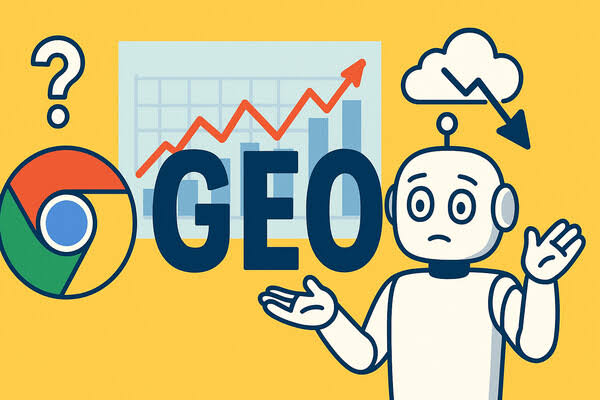
GEO in one simple picture
With normal search, a customer scans ten links and chooses one. With a generative engine, the customer reads one answer. Only a few sources get a place in that answer.
GEO is the work of earning one of those places.
Is GEO the same as “geo” in geo-targeting?
No. This is a common mix-up. In marketing, “geo” can also mean location, as in geo-targeting or geo-fencing. In this guide, GEO always means generative engine optimization. It has nothing to do with GPS or maps.
Where Did GEO Come From?
The term became known through a research paper called GEO: Generative Engine Optimization. Researchers from Princeton University, IIT Delhi, Georgia Tech and the Allen Institute for AI published it in November 2023. It was later presented at the KDD 2024 conference.
The researchers tested ways to change web content so that AI engines would use it more. They found that adding citations to sources, quotations from relevant experts and statistics made content more visible in AI answers. In their tests, some methods raised visibility by up to 40%.
What this research means for you
The results are useful, but be careful with them:
- They come from controlled tests, not from your own market. Real results will differ.
- The researchers also found that the effect changed from one topic to another. What works for a health page may not work for a travel page.
- AI tools change often, so a method that works today may work less well next year.
The main lesson is simple and lasting: content that is specific, sourced and clear is easier for AI to use.
GEO vs SEO vs AEO vs AI SEO: What Is the Difference?
You will see several terms used in this field. They overlap a lot. Here is a plain comparison.
| Term | What it means | Main focus |
|---|---|---|
| SEO | Search engine optimization | Ranking pages in a list of search results |
| GEO | Generative engine optimization | Getting your content used and cited in AI-written answers |
| AEO | Answer engine optimization | Giving direct answers that tools can show as the answer |
| AI SEO | The wider work of being found in AI search | GEO, AEO and the SEO base together |
Which term should you use?
For your business, the label matters less than the work. Many people use “AI SEO” as the umbrella term. GEO is the part about content and how it is written. AEO is similar, with more focus on direct answers.
If someone sells you “GEO” as a brand-new service that replaces everything, be careful. The best results come from a strong website, trusted business details and clear content working together. That starts with the basics of what SEO is.
How Does a Generative Engine Build an Answer?

You do not need to be technical to use GEO. But a simple view of the process helps you write better content.
Step 1: It reads and breaks down the question
The AI works out what the person really wants. For a question like “best dental clinic for braces in Kota Kinabalu”, it may look for price, location, reviews, treatment types and opening hours.
Step 2: It searches for sources
Many AI tools search the web, often with several related searches at once. Google has described AI Mode as splitting a question into smaller related searches. So one customer question can lead to many searches behind the scenes.
Step 3: It picks useful passages
The AI does not always use a whole page. It often picks the specific paragraph, list or table that answers part of the question. A clear passage with a direct answer has a better chance of being chosen.
Step 4: It writes the answer and adds sources
Finally, the AI writes a response in its own words and may link to the pages it used. A source can be quoted, summarised or only shown as a link.
What this means for your content
- Cover the related sub-questions, not only the main keyword.
- Write sections that stand on their own, because AI may use only one section.
- Make each fact easy to find, check and trust.
How to Write Content That AI Wants to Quote

These are the core writing habits of GEO. They apply to service pages, blog posts and FAQ pages.
1. Lead with the answer
Put the direct answer in the first one or two sentences under a heading. Then add detail. This helps readers and helps AI tools. Our AI SEO guide shows more on answering real customer questions.
2. Add facts, numbers and sources
Vague claims are hard to quote. Specific facts are easier to use. Compare:
- Vague: “We have lots of experience.”
- Specific: “We have completed over 120 website projects for Sabah businesses since 2018.”
Only use numbers you can prove. When you use outside data, name the source and link to it. It shows readers, and machines, where the fact came from.
3. Quote real people
Short quotes from named experts, staff or customers add trust and variety. Always ask permission, and keep quotes accurate. A quote like “Our bookings from Google rose after we fixed our business listing” from a named owner is better than an anonymous line.
4. Write sections that stand alone
If AI picks one section, it should still make sense. So:
- Name the subject in the section, not just “it” or “this”.
- Avoid phrases like “as mentioned above”.
- Define special terms the first time you use them.
- Keep each section focused on one idea.
5. Use clear structure
Headings written as questions, short paragraphs, bullet lists and simple tables all make content easier to read for both people and machines. Use a table when you compare options, and a numbered list when you give steps.
6. Show who is behind the content
Add the author name, a short bio, the date and your business details. This helps people, and tools, see that the content comes from a real, accountable source.
7. Keep content fresh
Outdated prices, old opening hours and last year’s information make a page less trustworthy. Review your key pages every few months. Show an “Updated” date, and make sure it is true.
A Simple Before-and-After Example

Here is how GEO changes a short paragraph for a dental clinic in Kota Kinabalu. The numbers below are example figures only. Use your own real figures.
Why the second version works better
- It starts with the exact question a customer would ask.
- It gives real numbers, a time frame and a visit pattern.
- It mentions location and opening times, which AI uses for local answers.
- It makes sense even if only that paragraph is shown.
A Simple GEO Checklist You Can Start With

What GEO Means for Malaysian Businesses

AI search is already live for Malaysian users. Google AI Overviews and AI Mode are available here, and AI Mode supports Bahasa Malaysia. So customers can ask in English, Malay or a mix.
Questions worth writing for
Think about the kinds of questions AI is often asked:
- Price questions: “How much does X cost in Malaysia?”
- Comparison questions: “X vs Y, which is better?”
- Local recommendation questions: “Best X in Kota Kinabalu.”
- How-to and process questions: “How do I apply for X?”
- Trust questions: “Is X safe?” or “Is X worth it?”
Write in your customers’ language
If your customers search in both English and Malay, give both. A short Bahasa Malaysia FAQ or a translated service page can open a second set of questions where fewer businesses compete. Keep the facts the same in both languages.
Industries that benefit early
GEO is useful for any business that people research before buying. It is a strong fit for tourism and diving operators, clinics, property agents, education providers, professional services and online stores, because customers in these fields ask AI to compare and explain before they decide.
Common GEO Myths

New fields attract hype. Here are myths to watch for.
Myth 1: GEO replaces SEO
It does not. AI tools still depend on content that can be found, read and trusted online. Good SEO is the base for GEO.
Myth 2: You can trick AI with the right wording
Hidden text, keyword stuffing and fake authority do not build trust. AI tools are built to recognise useful, reliable content. Real clarity beats tricks.
Myth 3: A special file will do it for you
Some people sell files such as llms.txt as a shortcut. At the time of writing, the major AI search tools have not confirmed that they rely on such files to choose sources. Do not pay for a shortcut before the basics are done.
Myth 4: More AI-written pages means more visibility
Mass-produced pages with thin content add little value. One page with real facts, real examples and real expertise is worth more than twenty generic ones.
Myth 5: GEO is a one-time job
AI tools, and your business, keep changing. Review your content regularly and keep facts up to date.
How to Check If GEO Is Working

Results in AI answers are hard to track, but you can still check progress. We explain the full process in our guide to how to measure AI SEO results. Here is the short version for GEO:
- Make a fixed list of 15 to 20 customer questions.
- Ask them each month in Google AI Mode, ChatGPT, Gemini and Perplexity.
- Record whether your business is named, whether your site is linked and whether the facts are correct.
- Repeat each question a few times, because answers change.
- Compare your enquiries over the same months.
Look at the trend over three to six months, not one day.
Should You Do GEO Yourself or Hire a Specialist?
You can start the checklist above on your own. It costs time, not money, and it improves your pages for human readers as well.
A specialist helps when you have many pages, a competitive market, or little time. They can audit your content, fix structure and schema, and track results. If you want help, see our AI SEO service for Malaysian businesses. Ask any provider what they will deliver each month, and avoid anyone who guarantees a place in AI answers.
Frequently Asked Questions About GEO
What is generative engine optimization in simple words?
Generative engine optimization (GEO) is improving your content so AI search tools can understand it and use it when they write answers. The goal is to have your business named or your page cited.
What does GEO stand for?
GEO stands for generative engine optimization. It is not the same as geo-targeting, which is about location.
What is GEO optimization?
GEO optimization means applying generative engine optimization to your pages. In practice, it means giving clear answers, adding facts and sources, structuring content well and keeping it up to date.
Is GEO different from SEO?
Yes, but they are connected. SEO aims to rank pages in search results. GEO aims to get your content used inside AI-written answers. Strong SEO supports GEO.
Is GEO the same as AI SEO?
Not exactly. AI SEO is the wider work of being found in AI search. GEO is the part focused on how content is written and chosen by generative engines.
Does GEO really work?
Research suggests that adding sources, quotes and statistics can raise visibility in AI answers, but results vary by topic and by tool. Treat GEO as a way to improve your chances, not a guarantee.
How long does GEO take to show results?
Most businesses should expect several months. Improvements to your pages may be picked up in weeks, but a steady change in mentions and enquiries usually takes three to six months.
Do small businesses need GEO?
If customers research your type of business before they buy, yes. Small local businesses can do well because AI often answers local questions, and clear, accurate pages are within reach of any business.
Start Small, Stay Clear, Keep Improving
GEO sounds new, but its heart is simple. Answer real questions. Use real facts. Show where they come from. Write so that each section can stand alone. Keep your business details accurate and your pages fresh.
Pick your three most important pages, work through the checklist, and check your results each month. If you want an expert to audit your site and plan the work, talk to us about our AI SEO service, or contact us for a free consultation.


Leave A Comment